The most useful Disney character in an online game is not always the loudest one. It is the one the player already understands before the first button press. That is why Mickey, Cinderella, Ariel, and Maleficent keep returning to game menus, promotional art, and playable rosters. Recognition lowers friction. Friction is expensive.
Why does Mickey still work as the default anchor? Why do Cinderella and Ariel keep resurfacing in adventure and collection games? Why does Maleficent stay relevant as a villain, even in family-friendly titles? Walt Disney once said,
“It’s kind of fun to do the impossible.”
In games, that idea is less a slogan than a production rule.
Disney keeps these characters visible on the official Mickey Mouse & Friends site, and current games such as Disney Speedstorm and Disney Magic Kingdoms keep turning those faces into mechanics. That matters because the characters are not decoration. They are part of the gameplay contract. If you want the short route through this site, start at the Home page or move to the Blog index for more Disney game coverage.
By the end of this article, you will know which Disney characters show up most often in online games, what role they play, why nostalgia changes player choice, and how those decisions shape the actual play experience. If you want the business case for character-driven design, this is the usable version, not the poster version.
Key Terms Worth Defining First
The terminology in character-driven games is simple, but it helps to name it cleanly. Once you do, the pattern becomes obvious.
| Term | Plain-English meaning | Why it matters here |
|---|---|---|
| Roster | The list of characters a game features, unlocks, or lets players control. | A roster is often the first reason a player tries the game at all. |
| Gameplay loop | The repeated action cycle that keeps the player moving forward. | Disney characters often shape the loop through quests, racing, collection, or combat. |
| Cosmetic | Visual changes like skins, outfits, themes, or decorations. | Disney games use cosmetics to turn recognition into long-term engagement. |
| IP | Intellectual property, or the protected character and story assets a publisher licenses. | Disney’s IP is the reason these games can borrow emotional weight so quickly. |
| Live-service | A game that adds updates, events, and content over time. | Live-service games depend on characters that can be refreshed without confusing the audience. |
The Characters That Keep Showing Up
I keep seeing the same pattern: the character is the hook, but the mechanic is the reason people stay. Disney has spent decades building characters that work across genres without losing their identity. That gives game teams a rare advantage. They can borrow trust, then spend that trust on actual play.
1. Mickey Mouse: The Default Anchor
Mickey Mouse is the most obvious place to start because he is the easiest character for players to read. He signals family-friendly play, low intimidation, and broad recognition across generations. In a game economy, that is a strong opening move. It is the same logic that puts a reliable front door on a store instead of a trapdoor in the ceiling.
Disney still treats Mickey as a central identity marker on the official Mickey Mouse & Friends site. In modern online games, that kind of continuity matters. It lets a title introduce mechanics without first explaining the brand. In Disney Speedstorm, for example, Mickey is part of a roster built around fast readability and competitive roles. Players know exactly what kind of universe they are entering, even if they do not yet know how the drift timing works.
- Why Mickey works: instant recognition, low friction, broad appeal.
- Gameplay role: tutorial-friendly anchor, mascot, and benchmark character.
- Player effect: people trust him before they trust the rest of the roster.
That is not sentimental fluff. It is product design with ears.
2. Cinderella and Ariel: Transformation and Discovery
Cinderella and Ariel do a different job. They are not just famous. They carry a built-in narrative engine. Cinderella is about perseverance and transformation, which makes her a natural fit for progression systems, fashion systems, and quest-based upgrades. Disney describes Cinderella as hopeful and determined on her official Disney Princess page, and that tone translates cleanly into games where the player starts small and earns a better outcome through play.
Ariel works for similar reasons, but with a different emotional engine. She is curiosity, exploration, and the desire to go farther than the current map suggests. In practice, that is ideal for adventure games, collection games, and worlds that reward discovery. A character like Ariel makes “what is behind that door?” feel like a story decision, not just a UI event.
Games such as Disney Magic Kingdoms lean hard into this logic. The game’s official description talks about collecting nearly 500 Disney, Pixar, and Star Wars characters, building attractions, and battling villains like Maleficent. That is not random. It is a system built around familiar characters as progression currency.
- Cinderella’s gameplay value: transformation, collection, and aspirational progress.
- Ariel’s gameplay value: curiosity, exploration, and world expansion.
- Shared effect: they make upgrades feel like story beats instead of chores.
3. Maleficent: The Villain Who Raises the Stakes
Every character roster needs a little danger. Maleficent is the easiest villain to use because she comes with a strong visual silhouette and immediate emotional clarity. The audience does not need a lecture. They already know the shape of the threat. Disney’s official Maleficent page frames her as the title character in a story built around menace, magic, and myth. That tone transfers directly into games.
Villains like Maleficent do three useful things. First, they create contrast: the friendly roster has somewhere to push against. Second, they improve replay value by adding challenge. Third, they give designers a fast route into higher stakes without inventing a new threat from scratch. If the player sees Maleficent, they know the game is not purely decorative. There will be consequences, and possibly fire. That helps.
- Why Maleficent works: immediate threat, strong silhouette, built-in drama.
- Gameplay role: boss, antagonist, event villain, or high-value unlock.
- Player effect: she adds tension without a long setup sequence.
4. The Supporting Cast: Elsa, Belle, Stitch, and Friends
Disney games do not rely on the headline names alone. The supporting cast does a lot of the heavy lifting. Elsa brings power fantasy and visual spectacle. Belle brings storybook intelligence and a calmer pace. Stitch brings chaos, which is useful because not every game should feel like a library. When those characters rotate into a game, the design changes from one mood to another without breaking the brand.
This is why the roster matters so much. A game with only one emotional register gets old fast. A game with multiple registers can keep reopening itself. Disney’s catalog is unusually good at that because the characters are already sorted by tone, audience, and gameplay utility. A designer can pick the right personality for the right loop.
| Character | Common game role | What players get from it |
|---|---|---|
| Mickey Mouse | Mascot, starter, default hero | Confidence and familiarity |
| Cinderella | Progression, customization, transformation | A feeling of earned change |
| Ariel | Exploration, discovery, collection | Curiosity and forward motion |
| Maleficent | Antagonist, boss, event challenge | Pressure and stakes |
| Elsa | Power character, visual effects, special abilities | Control and spectacle |
| Stitch | Wildcard, comic relief, disruption | Energy and unpredictability |
Why Nostalgia Still Wins the Decision
Nostalgia is often treated like a soft emotion. In game design, it behaves more like a conversion lever. If a player already likes the character, the game gets a head start. The onboarding burden drops. The first unlock feels meaningful. The collectible becomes personal instead of abstract.
There are five reasons this works so well:
- Instant readability. Players know the personality, tone, and expectation level before the tutorial begins.
- Shared memory. Parents, kids, and long-time fans can all join the same conversation without translation.
- Reduced risk. A known character lowers the fear of trying an unfamiliar game.
- Collection pressure. Familiar faces make it easier to justify unlocks, event participation, and cosmetic purchases.
- Stream and screenshot value. Iconic characters are easier to share, clip, and recognize at a glance.
I do not think nostalgia is a substitute for good mechanics. It is a multiplier. If the game is weak, nostalgia only delays the complaint. If the game is strong, nostalgia makes the experience stick. That is the part marketers usually understate because it sounds too much like a decision tree and not enough like a parade.
How the Best Disney Games Use Characters Well
The games that last are the ones that do more than paste a famous face onto a menu. They turn the character into a function.
| Game | How characters are used | Why the design works |
|---|---|---|
| Disney Speedstorm | Characters become racers with distinct abilities and track identities. | The roster creates competitive variety, not just visual variety. |
| Disney Magic Kingdoms | Characters drive quests, park building, and collection goals. | Players keep returning to expand a world they already care about. |
| Disney Dreamlight Valley | Characters become neighbors, quest givers, and progression partners. | The emotional relationship becomes part of daily play. |
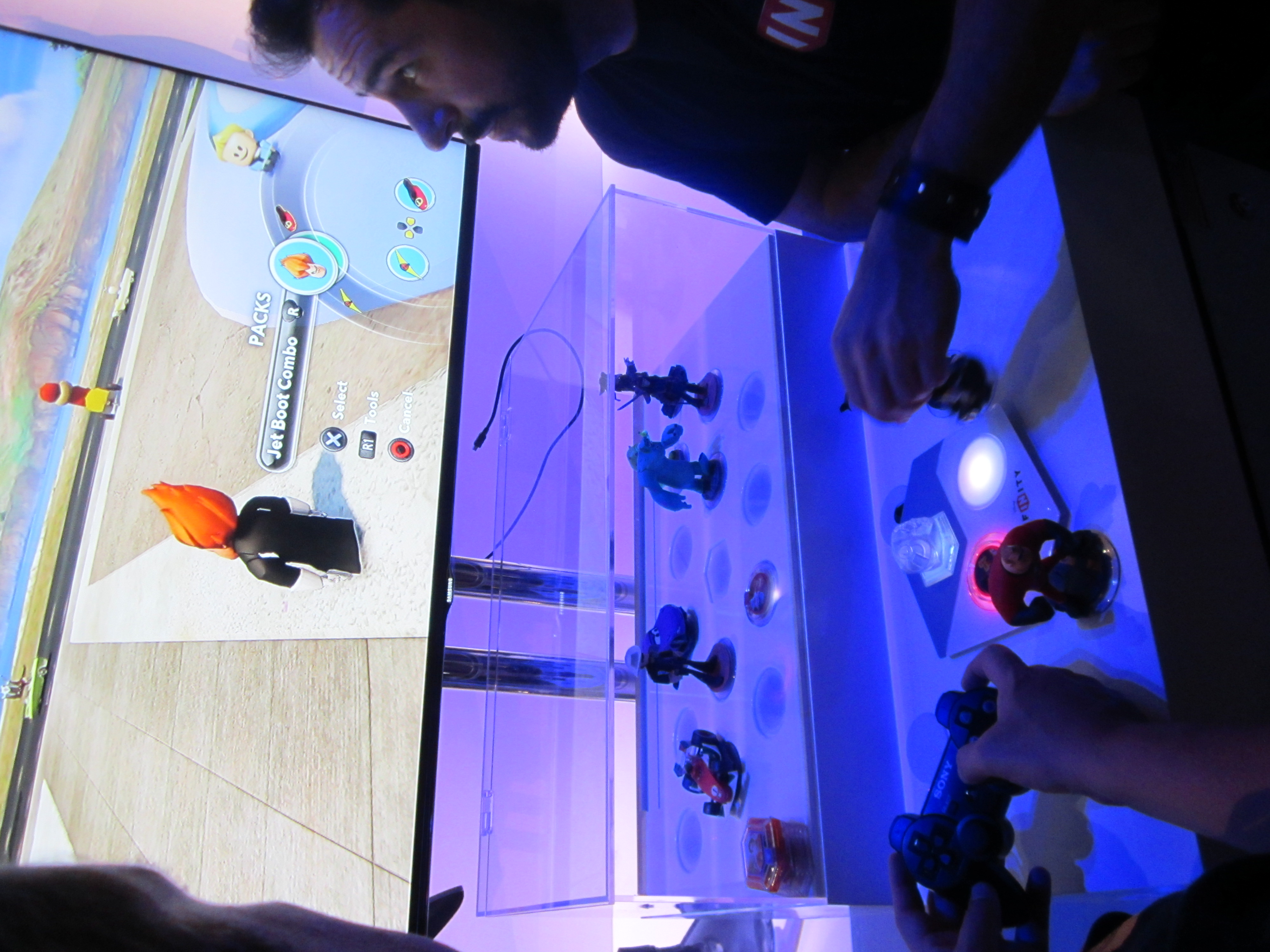
| Disney Infinity | Characters served as toys in a shared sandbox. | The system rewarded imagination and cross-character play. |
The difference is simple. Weak character use says, “Look, it’s the character you like.” Strong character use says, “The character changes how you play.” The second version keeps players around longer. That is usually the one worth building.
Disney Speedstorm is a good example of the newer approach. Gameloft’s announcement describes the game as a high-octane racing title with Disney and Pixar heroes and villains reimagined as road warriors. That is exactly the kind of transformation that works. It keeps the identity recognizable while letting the mechanic do the heavy lifting. In other words: branding with throttle control.
Fan Favorites and Player Experience
When players talk about Disney games, the conversation usually falls into a few patterns. Some people pick the character they loved first. Some pick the character that gives them the cleanest gameplay advantage. Others pick the character that feels funniest, loudest, or most chaotic. Those are different preferences, but they all point to the same truth: character choice is never just cosmetic.
In community spaces, the most common stories are easy to spot:
- The childhood pick: a player chooses the character they grew up with and treats the game as a reunion.
- The completionist pick: a player wants every variant, skin, or unlock because the roster itself is the reward.
- The power pick: a player chooses the character whose abilities make progression smoother.
- The chaos pick: a player picks the villain or wildcard because the game is more fun when it misbehaves a little.
That is why Disney games tend to do well when they give players multiple reasons to care. The best experience is not always the most technically complex one. It is the one that lets a player say, “That is my character,” and then mean something deeper than a username.
There is also a practical side to this. Iconic characters help games cross age groups. A child may love the bright costume and simple ability. A parent may remember the original film. A long-time fan may care about the exact costume, era, or voice line. Good character design gives each of those players a different entry point while keeping the same structure underneath.
What the Best Roster Design Actually Teaches
These characters are useful because they make good decisions visible. A player can tell what the game values by looking at who gets promoted, who gets new abilities, and who gets special event treatment. That is why roster design is closer to operations than decoration. It tells the player where the publisher wants attention to go.
Five practical lessons show up over and over:
- Give each character a job. Mickey should not feel like Cinderella with different ears. Distinct roles reduce boredom.
- Protect silhouette and tone. A player should know if they are selecting a hero, a support, or a troublemaker before the match starts.
- Use nostalgia to reduce explanation, not replace depth. Familiarity is the invitation; mechanics are the reason to remain.
- Let villains create pacing. Maleficent-style enemies are useful because they give the game a rhythm between comfort and resistance.
- Rotate the cast intelligently. A live game needs freshness, but freshness works best when it respects the memory already in the room.
When those five rules are ignored, the game becomes a souvenir shop with loading screens. The animation may still be good. The design usually is not.
Disney’s catalog is unusually effective because it can support many different player motivations at once. One player wants a safe favorite. Another wants a challenge. Another wants a collectible. Another wants a recognizable world to share with family. A good game can satisfy all four without forcing them into the same loop.
That is the real reason these characters endure. They are not just famous. They are structurally useful. Game teams can build around them, not just place them in front of the camera and hope the audience applauds on cue. The audience generally notices when the design earns the face.
How to Choose Your Starting Character
If you are new to a Disney game, the easiest choice is usually the best one. Start with the character whose role matches your intention, not the one with the most marketing ink.
- Choose Mickey if you want a stable, readable entry point and a character that almost never feels like a mistake.
- Choose Cinderella if you like progression, customization, and the satisfaction of visible improvement.
- Choose Ariel if you prefer exploration and a little uncertainty in the path ahead.
- Choose Maleficent if you want higher stakes and a sharper challenge curve.
- Choose Stitch if the game gives you the option and you would like your evening to be less orderly than planned.
That sort of decision is the quiet engine behind player retention. People stay where the first choice feels right. They stay longer when the second choice still feels interesting. A Disney roster works when both are true.
The Bottom Line
Disney characters matter in online games because they do three jobs at once: they attract attention, shape mechanics, and trigger memory. That combination is hard to beat. Mickey provides trust. Cinderella and Ariel bring transformation and discovery. Maleficent raises the stakes. The supporting cast keeps the system flexible.
My view is straightforward: if the character does not change the way people play, then the game is leaving value on the table. If the character does change the way people play, then the roster becomes part of the design, not just the marketing. That is the real standard.
If you have a favorite Disney game character, share it with us through the Contact page or keep reading the Blog for more practical takes on Disney games. For context on the site itself, the About page is the cleanest place to start. No mystery there, which is usually a relief.
- Disney characters lower the barrier to play.
- Nostalgia changes what players choose and why they stay.
- Game mechanics matter more when the character identity is strong.
- Popular Disney games use characters as functional parts of the experience, not ornaments.