Disney online games did not arrive all at once as polished apps or live-service platforms. They grew in layers: first through character-driven console games, then through browser worlds, and later through mobile, multiplayer, and account-based play.
Readers usually come to this topic with a few practical questions in mind. Which Disney games really changed the direction of the medium? When did browser play turn into social and mobile play? Why do some older Disney titles still feel memorable even when the technology looks simple by current standards? Those are useful questions because the history is less linear than nostalgia sometimes suggests.
If I follow the available evidence across Disney’s game history, one pattern becomes hard to miss: Disney’s approach to games has always moved with shifts in platform behavior. As Disney’s interactive business expanded through licensing, internal publishing, and later platform partnerships, the company’s game output changed with it. The background on Disney Interactive Studios is useful here because it shows how often strategy, ownership, and distribution models were adjusted as the market changed.
By the end of this article, you should have a clearer sense of where Disney online games began, which milestones mattered most, how technology changed the feel of play, and why today’s Disney game ecosystem mixes nostalgia with ongoing service design. If you want a broader starting point first, the homepage is a quick way back to the main game hub.
What Counts as a Disney Online Game?
Context matters here. Not every important Disney game was originally online, but many of the habits that shaped Disney’s later online catalog were built earlier. Licensed console games taught players to expect recognizable characters, direct objectives, bright visual identity, and quick emotional payoffs. Later web and mobile titles kept those expectations but added persistence, social features, account progress, seasonal updates, and easier access across devices.
- Early foundation: character-based games on home computers and consoles that established the tone and appeal.
- Browser era: lightweight online destinations, mini-games, and virtual worlds that lowered the barrier to entry.
- Social and mobile era: short-session games tied to accounts, apps, and live updates.
- Current era: cross-platform ecosystems, community play, and games that blend nostalgia with ongoing content.
That framing matters because it keeps us from making a category mistake. The evolution of Disney online games is partly a story about the internet, but it is also a story about audience habits. Families moved from shared desktop sessions to tablets and phones. Players became more comfortable with updates, events, and progression systems. Disney’s games changed because the rooms people played in changed too.
The Early Foundation: Simple Design, Strong Character Appeal
The first layer of the story sits before the online boom. Disney-themed games in the late 1980s and 1990s were usually straightforward platformers, puzzle titles, or movie tie-ins. Their technical limits were obvious, but their design strengths were equally obvious: clear character recognition, readable goals, and a tone that felt approachable for younger players without becoming empty for everyone else.
Those earlier games mattered because they defined what “Disney play” felt like long before broadband became normal. Bright movement, familiar worlds, and a balance of challenge and accessibility became the emotional template. Even when the visuals were pixel-based and the mechanics were fairly direct, the games worked because players already cared about the characters and settings.
When online play began to matter more, Disney did not have to invent audience trust from scratch. It could bring existing character loyalty into web-based spaces, mini-games, and virtual communities. That is one reason the move from standalone game to online destination felt plausible rather than forced. The technology changed, but the invitation stayed recognizable: enter a familiar Disney world, learn quickly, and enjoy the sense of playful discovery.
A Timeline of the Major Shifts
| Era | Representative direction | What changed for players |
|---|---|---|
| Late 1980s to 1990s | Console and PC Disney character games | Players expected approachable gameplay, recognizable worlds, and quick emotional connection. |
| Early 2000s | Web mini-games and family-friendly online portals | Access became easier because games could be started in a browser instead of through dedicated hardware. |
| Mid-2000s | Virtual worlds such as Toontown Online and VMK | Play became social, persistent, and identity-based rather than just session-based. |
| Late 2000s to early 2010s | Large youth communities including Club Penguin under Disney ownership | Safety tools, account systems, and events became central parts of the experience. |
| 2010s | Mobile games, toys-to-life experiments, and broader franchise crossover | Progress moved across devices, update cadence accelerated, and engagement stretched beyond the desktop. |
| 2020s | Cross-platform titles, live content, and nostalgia-led design | Players expect regular events, polished interfaces, and worlds that can support long-term return visits. |
This timeline is useful because it shows that Disney’s game history is not a straight line from “basic” to “advanced.” It is better understood as a sequence of platform shifts. Every time the dominant device, business model, or audience habit changed, Disney’s game strategy shifted with it.
Milestones That Changed the Disney Gaming Landscape
The early 2000s were a real turning point. Browser access created a much easier doorway for casual players, especially children and families who were not approaching games as a specialist hobby. That broader access mattered as much as any graphical improvement. Convenience became part of the design.
Toontown Online is one of the clearest milestones from this period. It was not simply a Disney-branded game placed on the internet. It was a persistent world with avatars, exploration, light role-playing, and social cooperation. For many players, that changed the meaning of a Disney game. The experience was no longer limited to completing a level or replaying a movie scene. Instead, players could stay in the world, build a character, and return over time.
Another important example was Virtual Magic Kingdom, often remembered for translating part of the Disney parks fantasy into an online social setting. Even if its technology now looks modest, the design idea was larger than the hardware: Disney worlds could become shared places instead of one-way experiences. That mattered because it opened the door to a more community-driven style of engagement.
The next major shift came when Disney acquired Club Penguin. Strictly speaking, Club Penguin did not begin as a Disney-built product, but it became one of the strongest examples of how Disney could operate a large-scale, kid-focused online community. The lesson was not only about growth. It was also about moderation, identity, events, and the careful balancing act required when a game is also a social space.
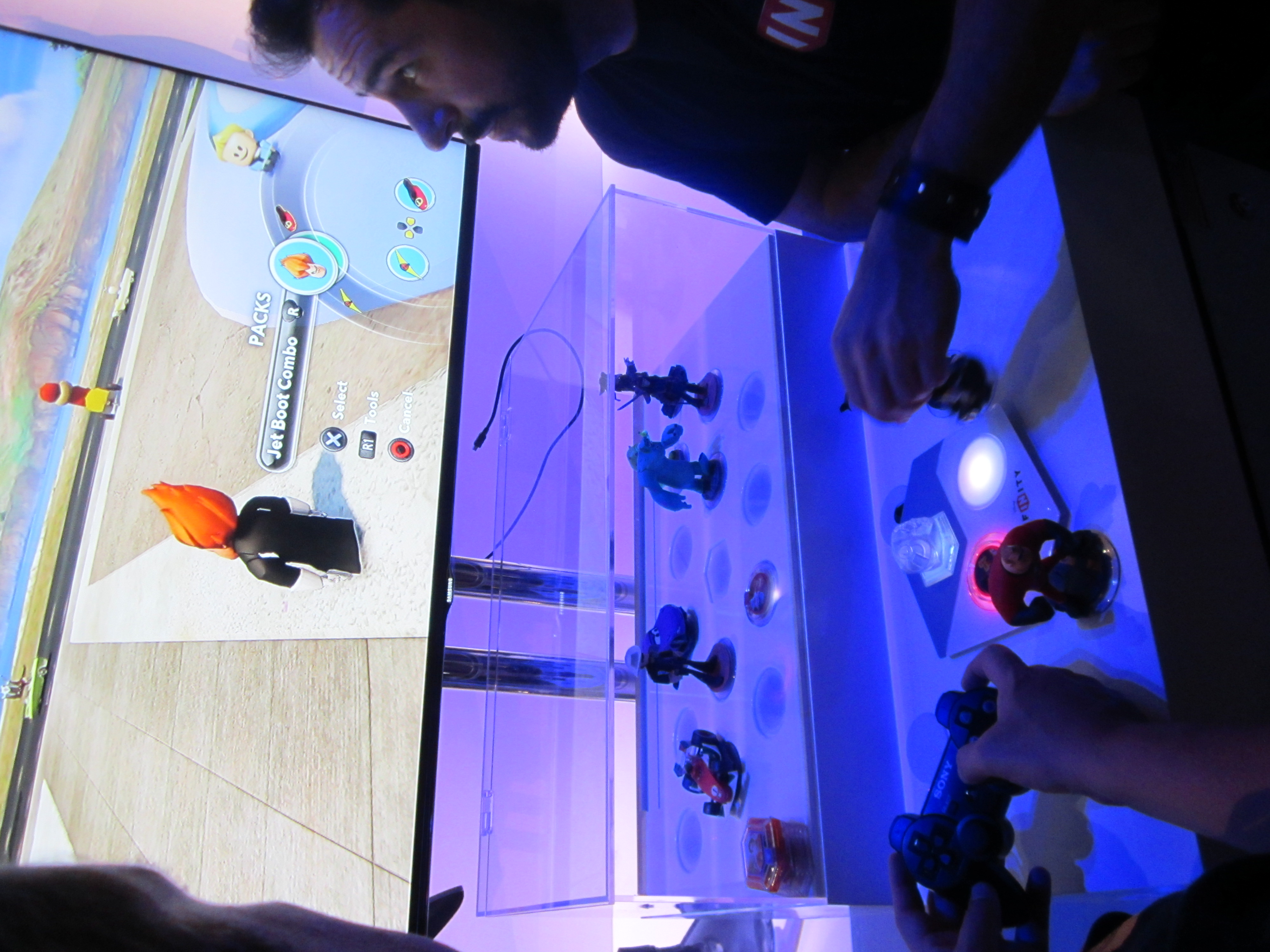
Then came the era of broader franchise integration. Games no longer had to sit neatly inside one film release or one character lane. They could pull from multiple parts of Disney’s catalog, connect to toys, expand through updates, and live across several devices. Disney Infinity became the most visible symbol of that approach. It blended collectible figures, digital play, and world-building in a way that reflected the industry’s wider interest in connected ecosystems.
Not every milestone lasted, of course. Some projects closed, some platforms aged out, and some business models proved expensive to maintain. That is not a side note. It is part of the real history. Disney’s game evolution includes experimentation, retrenchment, and reinvention, not just steady expansion. That is one reason the history remains interesting: it tracks both ambition and constraint.
How Technology Changed the Feel of Gameplay
It is easy to reduce this section to a simple story about better graphics, but that would miss the more useful point. Technology changed Disney games in at least four overlapping ways: visual presentation, input style, social structure, and content delivery.
1. From 2D Charm to 3D Space
Early Disney titles relied on strong silhouettes, readable movement, and compact level design. As hardware improved, 3D environments allowed for broader exploration, more cinematic staging, and richer world-building. That shift was not automatically better in every case. Some older 2D games remain beloved precisely because their limitations created clarity. Still, the move into 3D gave Disney games more room to approximate the feeling of stepping inside a film or themed environment.
2. From Local Sessions to Social Persistence
Online infrastructure changed the emotional rhythm of play. A local game ends when you switch off the console. A persistent online world leaves the sense that something continues even when you log out. That change mattered enormously for Disney’s virtual-world era. Friends lists, in-game identity, recurring events, and shared spaces made these titles feel more like destinations than products.
3. From Desktop Browsers to Mobile Convenience
The rise of smartphones and tablets changed who could play, when they could play, and how long a session needed to be. Mobile design encouraged touch-based controls, shorter loops, and event-driven retention. In practical terms, that meant Disney games could fit into school pickups, waiting rooms, sofa time, and quick evening check-ins. Accessibility stopped meaning only skill accessibility; it also started to mean schedule accessibility.
4. From Fixed Releases to Ongoing Updates
Older games were often judged as finished objects. Modern online and mobile titles are more often judged as living services. Seasonal events, limited-time rewards, interface refreshes, and franchise tie-ins all keep the game in motion. This model has obvious strengths: it can keep players engaged and make worlds feel active. It also has tradeoffs. Preservation becomes harder, design can tilt toward habit loops, and older players sometimes miss the completeness of a self-contained game.
The useful takeaway is simple: technology did not only make Disney games prettier; it changed the contract between player and game. The player moved from visitor to participant, then from participant to returning account-holder inside an evolving ecosystem.
What Current Disney Game Trends Tell Us
Current Disney game trends reflect a blend of old strengths and newer expectations. The old strengths are still familiar: beloved characters, approachable worlds, recognizable visual storytelling, and broad audience reach. The newer expectations are equally clear: regular updates, smooth onboarding, cross-platform access, and game loops that respect shorter attention windows.
- Nostalgia now functions as design material. Older characters, worlds, and mechanics are often reintroduced in ways that feel accessible to newer players while still signaling continuity to long-time fans.
- Account-based progression is normal. Players expect continuity across sessions and, increasingly, across devices.
- Online community features remain important. Events, multiplayer modes, and shared progression create reasons to return.
- Franchise mixing is more accepted than it once was. Players are comfortable seeing multiple Disney properties coexist inside one broader game framework.
- AR and VR are still more experimental than foundational. They attract attention, but they have not replaced the broader appeal of mobile and cross-platform formats.
That last point deserves a careful note. People often talk about AR and VR as if they are the inevitable next chapter for every entertainment brand. Available evidence suggests a more cautious conclusion. They are promising formats for immersive storytelling, but mainstream Disney game reach still depends far more on accessible devices and repeat-friendly design than on expensive hardware. In other words, the future may be immersive, but it still has to be easy to enter.
That is also why some of the most durable modern Disney-related game ideas do not rely on technical spectacle alone. They rely on familiar worlds, social hooks, manageable session length, and steady content refresh. If you browse the blog, you can see that many of the site’s recent posts circle back to the same practical truth: people return to games that fit their routines as well as their interests.
Why This History Still Matters
For nostalgic players, this history explains why some early Disney games still feel distinct even when newer titles are technically more advanced. For newer players, it offers something just as useful: a way to understand that today’s polished interfaces, seasonal events, and flexible device support did not appear from nowhere. They are the result of decades of experimentation in how Disney worlds are translated into play.
I would put the main conclusion this way: Disney online games evolved by following changes in access, not by abandoning their identity. The tools changed from cartridges to browsers to apps and live-service structures. The underlying appeal remained surprisingly stable: familiar characters, welcoming worlds, and a sense that play should begin quickly and stay emotionally legible.
That perspective can sharpen how you evaluate current releases. Instead of asking only whether a new game looks modern, ask a better question: what part of the Disney game tradition is it continuing, and what new behavior is it trying to teach players? Sometimes the answer is social play. Sometimes it is cross-platform convenience. Sometimes it is the quiet power of nostalgia, which remains one of the industry’s most reliable engines when used with care.
Practical Takeaways for Readers
- If you enjoy older Disney games, the appeal is not only nostalgia. Many of those titles were built around clear feedback, strong pacing, and immediate charm.
- If you enjoy newer Disney games, much of what feels modern comes from account systems, update cycles, mobile design, and community features rather than graphics alone.
- If you are comparing eras, look at access, social structure, and session length as much as visuals.
- If you want more context on the site’s approach, the About page explains the broader purpose behind the game’s coverage and resources.
The short version: Disney online games changed dramatically in form, but less dramatically in purpose. Early titles offered quick, character-led fun. Browser worlds expanded that into shared spaces. Mobile and live-service design turned Disney play into an ongoing relationship. Understanding that arc makes current games easier to read and, in many cases, easier to appreciate.