The best Disney educational games do not feel like school trying to sneak past the front desk. They feel like play first, and that is exactly why families keep coming back to them at home.
When parents look for Disney educational games, the real questions are usually practical ones. Which games teach something useful? Which ones work for short sessions after school? Which ones are calm enough for a kitchen table or living room floor? And which ones are still fun after the novelty wears off? Those questions matter because the wrong game can become noise very quickly. The right one can become a small, repeatable habit that kids actually ask for.
That is why the learning-through-play angle matters. The National Association for the Education of Young Children’s play resources argue that playful learning supports development across multiple areas and can improve learning compared with more direct instruction. Code.org’s Code with Anna and Elsa gives a neat Disney example of that idea in practice: a child is learning sequencing and problem solving while following a familiar Frozen story. The point is not that every Disney game is educational in the same way. The point is that the best ones give children a reason to think, try, adjust, and try again.
In this guide, I will walk through the strongest Disney games for home learning, explain what each one teaches, and show how parents can make the learning stick without turning playtime into a lecture. If you want the broader site context while you read, the home page is the fastest starting point, the blog collects more guides like this one, and the about page explains the site’s overall approach.
Why educational gaming works at home
I like to start with a simple definition. An educational game is any game that helps a child practice a skill that still matters after the screen goes dark or the board goes back in the box. That skill might be memory, sequencing, reading, pattern recognition, cooperation, or planning ahead. The details vary, but the principle is the same: the child is not just being occupied. The child is practicing.
This is where Disney-branded games often have an edge. Children already know many of the characters, worlds, and stories. That lowers resistance. Instead of asking, “Why am I doing this?” a child is more likely to ask, “Can I do the next round?” That shift matters. Motivation is not a bonus feature in home learning. It is half the job.
Here is a small glossary that helps keep the conversation clear:
| Term | Simple meaning | Why it matters at home |
|---|---|---|
| Playful learning | Learning that happens through exploration, choice, and active participation. | It feels less like a test, so children usually stay engaged longer. |
| Transfer | Using a skill learned in one setting somewhere else. | A child who practices sequencing in a game may use the same habit in reading or daily routines. |
| Scaffolding | Light guidance that helps a child take the next step without taking over. | A parent can prompt thinking without turning the game into a worksheet. |
| Replay value | The reason a child wants to return to the same game again. | Repeated play is what makes the learning stick. |
| Cooperative play | Play where players work together rather than only trying to beat one another. | It is useful for mixed-age families and for kids who do better with shared goals. |
The important thing is not to overcomplicate the label. A game does not need to be academic to be educational. It needs a clear challenge, a meaningful decision, and enough repetition for the child to notice improvement. The Child Mind Institute’s benefits of play article makes a similar point from a developmental angle: play supports growth precisely because it asks children to act, adapt, and keep going. That is the sweet spot.
Top Disney educational games for learning at home
The list below mixes digital and tabletop options because home learning does not happen in one format. Some kids learn best on a tablet. Others need a board, cards, or visible pieces to stay oriented. In my experience, the best family setups keep both in play.
To keep the comparison simple, I would sort the strongest options like this:
| Game | Format | Main learning focus | Best fit at home |
|---|---|---|---|
| Code with Anna and Elsa | Online coding activity | Sequencing, logic, persistence | Short guided sessions with a child who likes puzzles |
| Disney Eye Found It! | Board game | Visual scanning, counting, teamwork | Family table play with younger children |
| Disney Coloring World | Creative app | Creativity, concentration, fine-motor planning | Calm screen time for children who like making choices |
| Disney Princess Enchanted Forest Sagaland | Board game | Memory, route planning, turn-taking | Shared play that is a little more strategic |
| Disney Lorcana Gateway | Card game starter experience | Reading, planning, resource management | Older kids ready for more rules and more decision-making |
1. Code with Anna and Elsa
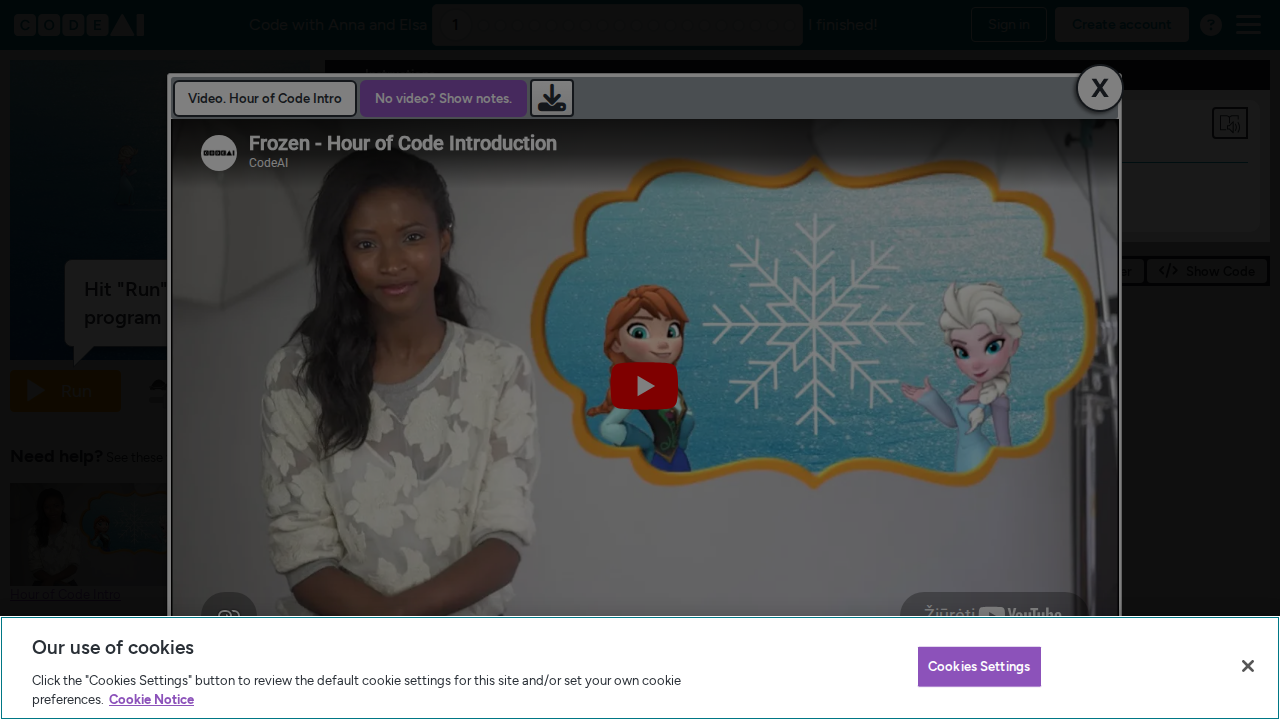
Code with Anna and Elsa is the clearest fit when the goal is early logic practice. The activity uses Frozen characters to teach coding ideas through simple puzzles. A child has to arrange commands in a useful order, test the result, and fix the path when the first try does not work. That is coding, but it is also a very good lesson in structured thinking.
What I like most is the feedback loop. The child sees the result right away. That makes the learning visible. It is easier to stay interested in a puzzle when the game answers back quickly instead of making the child wait through long instructions or dull explanations. If you want a first digital learning game that still feels playful, this is a strong place to begin.
Code.org also makes a broader point that is worth remembering: the Frozen activity is not only for children who already care about programming. It is for children who need to see that a sequence of small decisions can lead to a result. That lesson shows up everywhere at home, from following a recipe to organizing a backpack.
- Best for: younger children who like puzzles, patterns, and step-by-step problem solving.
- Learning strengths: sequencing, debugging, spatial reasoning, and attention to order.
- Parent note: ask the child to predict what will happen before they press run. That one question usually deepens the learning.
2. Disney Eye Found It!
Disney Eye Found It! is a board game built around search, observation, and shared movement. Ravensburger describes it as a race through illustrated Disney realms, which is a good summary of why children respond to it. The game asks them to look carefully, notice details, and keep scanning until they find what they need.
That sounds simple, but it is useful work. Children practice visual discrimination, counting, turn-taking, and focus. They also practice staying with a task when the answer is not immediate. That may not sound glamorous, but it is exactly the kind of skill that helps with reading readiness and classroom attention. For a family that wants a low-screen option with recognizable characters, this game does a lot of quiet heavy lifting.
The cooperative side is worth noting. Younger kids often do better when an adult frames the game as a shared hunt rather than a win-or-lose contest. Instead of asking who is ahead, it is often more productive to ask what the team needs to find next. That keeps the mood calm and the learning visible.
- Best for: preschool and early elementary players, especially mixed-age family groups.
- Learning strengths: observation, counting, patience, cooperation, and rule-following.
- Parent note: if one child is much faster than the others, keep the focus on teamwork instead of speed.
3. Disney Coloring World
Disney Coloring World is a useful reminder that educational play does not always need a right answer. StoryToys describes the app as a creative space with a large library of coloring pages and interactive 3D playsets. That is a strong fit for children who learn by making choices, testing color combinations, and building little scenes of their own.
This is not just a “keep them busy” app. Coloring supports concentration, planning, and fine-motor control. The digital format can also be helpful for children who feel hesitant about paper-based art or who want the immediate reward of changing colors, saving work, and moving between characters and scenes. In practical terms, it gives parents a calmer screen option that still rewards attention and imagination.
I also like it because it leaves room for conversation. A parent can ask why a child chose a certain color, what story the scene suggests, or how a character might look in a different setting. That kind of talk is not extra. It is part of the learning.
- Best for: children who enjoy drawing, decorating, and open-ended creative play.
- Learning strengths: concentration, visual planning, color choice, creativity, and confidence.
- Parent note: use it as a calm reset after a busy day rather than as a high-energy reward.
4. Disney Princess Enchanted Forest Sagaland
Disney Princess Enchanted Forest Sagaland is one of the stronger Disney board-game options for memory and planning. Ravensburger frames it as a search-and-find game with a classic memory-match twist, and that description is accurate enough to be useful. Players move around the board, remember where key items are hidden, and decide when to act on what they have learned.
That delayed payoff is the real educational value. Children do not just collect information. They have to hold it, wait, and use it later. That is a valuable habit for reading, classroom work, and even daily routines at home. The game also stays friendly for younger players because the theme is inviting and the rules are not overly complicated. It feels like a story, but it quietly teaches strategy.
If a child already likes matching games and is ready for a little more structure, this is a very good next step. It is also one of the easier games for adults to coach without taking over. A well-timed hint can help a child make the leap from casual searching to purposeful planning.
- Best for: kids who already enjoy memory games and are ready for one more layer of strategy.
- Learning strengths: recall, route planning, patience, and flexible thinking.
- Parent note: narrate the thinking out loud: “You saw the tree earlier, so now let’s plan the path.”
5. Disney Lorcana Gateway
Disney Lorcana Gateway sits at the older end of the list, and that is why it works. The official how-to-play materials make it clear that the game rewards learning the rules and then using those rules to make better decisions. That makes it especially useful for children who are ready to read closely, plan turns in advance, and think about resource management instead of just taking a single action and hoping for the best.
For home learning, the educational value is in the reading and the sequencing. Kids have to track text, compare options, and understand how one choice changes the next one. That is a stronger challenge than many parents expect from a Disney-branded game, but that is part of the appeal. It gives older kids a reason to keep practicing skills they already use in school, while still feeling like a game about characters they know.
I would not hand this to a younger child and expect smooth results. The game asks for sustained attention. But for a child who is ready for more complexity, it can be a very good bridge between simple family games and more layered strategy play.
- Best for: older children who read comfortably and like strategic thinking.
- Learning strengths: reading comprehension, planning, resource use, and turn-based decision-making.
- Parent note: keep the first session small. A short guided game is better than trying to explain every rule at once.
What learning through play actually gives children
The best argument for educational games is not that they magically replace instruction. They do something more modest and more useful. They make practice feel worth repeating. That matters because repetition is where many early skills become stable. A child who willingly returns to a game is also returning to the underlying skill.
Here is the pattern I see most often:
- Engagement improves. Children stay with a challenge longer when the theme feels familiar and inviting.
- Motivation improves. The child is doing something with a story, not just absorbing a lesson.
- Creativity improves. Open-ended games create more room for choice, experimentation, and story-building.
- Social skills improve. Shared games naturally practice turn-taking, patience, and conversation.
- Thinking becomes visible. Parents can hear how a child reasons, not just whether the answer was right.
That last point is underrated. When a child explains a move, they are giving you a look at the learning process itself. You hear whether they are guessing, comparing, planning, or remembering. That is valuable information for parents, and it is the kind of information that helps you choose the next game more wisely.
NAEYC’s work on playful learning is useful here because it frames play as more than a break from learning. It is often the medium through which learning becomes more durable. The LEGO Foundation’s learning through play hub makes that case clearly: active play is not a distraction from learning, but one of its most reliable forms. That is especially true at home, where children usually do not want a mini-lesson after dinner. They want to do something that feels alive. A good Disney educational game meets them there.
There is also a practical side to this. If a game offers a clear challenge, a fair amount of repetition, and a visible sense of progress, families are more likely to use it again. That matters more than a polished educational claim on a package or app store page. The game has to survive Tuesday night, not just launch day.
Tips for parents using Disney games at home
Parents usually do not need more options. They need better filters. The question is not “Which game looks most educational?” The question is “Which game fits this child, this moment, and this amount of attention?” That is a better way to think about home learning.
These are the filters I would use:
- Match the game to the child’s stamina. If focus lasts ten minutes, start there. Do not choose the game that needs forty minutes of patience before it gets fun.
- Match the game to the time of day. A coding puzzle might work well before homework. A coloring app or board game may fit better after a long day.
- Keep the first round small. The first session should build confidence, not solve every problem at once.
- Talk about choices, not just results. Ask why the child made a move, what they noticed, or what they might do differently next time.
- Use cooperative play when competition becomes the point. If the room turns tense, shift from winning to shared progress.
- Watch for replay value. A game that gets used again is usually more educational than one that is impressive once and forgotten after that.
There is another practical rule I trust: if the child stops enjoying the activity, the educational value drops quickly. That does not mean every learning moment has to be exciting. It means the game should be scaled to the child, not the other way around. If the challenge is too easy, the child gets bored. If it is too hard, the child checks out. The useful zone is in between.
A simple weekly rhythm can help, especially if you want learning to feel steady without becoming rigid:
| Day | Suggested game | What it supports |
|---|---|---|
| Monday or Tuesday | Code with Anna and Elsa | Sequencing and problem solving |
| Midweek | Disney Coloring World | Creativity and calm focus |
| Weekend family time | Disney Eye Found It! or Disney Princess Enchanted Forest Sagaland | Shared play, memory, observation, and conversation |
| Older-kid session | Disney Lorcana Gateway | Reading, planning, and strategic thinking |
That rotation is not a prescription. It is a practical pattern. It gives children different kinds of thinking across the week instead of asking one game to do every job. That is usually where families feel the difference. The child gets variety, and the parent gets a clearer sense of what actually holds attention.
How to choose the right game for the right child
If I had to reduce the whole topic to one sentence, it would be this: the best Disney educational game is the one that matches the child’s current way of learning. Some children need logic. Some need visual searching. Some need calm creativity. Some need reading-heavy strategy. The brand is not the point. The fit is the point.
So when you are choosing, ask yourself a few plain questions:
- Does this child like puzzles or stories more?
- Do they stay calmer with a board and pieces, or with a tablet and immediate feedback?
- Do they need more help with attention, memory, reading, or cooperation?
- Will they want to replay this game next week, or is it likely to be a one-time novelty?
Those questions are more useful than a generic age label alone. Age matters, of course, but interest and stamina matter too. A seven-year-old may want a coloring app while a ten-year-old may prefer a search-and-find board game. A child who already loves reading may be ready for card strategy earlier than expected. A child who hates long rules may do beautifully with a simple logic activity. The game should feel like an invitation, not a hurdle.
And if you want a broader frame for the site itself, the blog keeps the other Disney gaming guides in one place. The about page explains the site’s direction in more detail, and the home page is the quickest route back to the main hub if you want to start over.
Conclusion
Disney educational games work best when they do something ordinary children already want to do: play, repeat, and improve. That is the real advantage of this category. It gives families a way to practice useful skills without turning the evening into homework in disguise.
For younger children, Code with Anna and Elsa is a strong entry point because it makes sequencing feel like a puzzle. Disney Eye Found It! is a good family board-game choice because it trains attention and observation. Disney Coloring World works well for calmer creative play. Disney Princess Enchanted Forest Sagaland adds memory and planning. Disney Lorcana Gateway is best once a child is ready for more reading and more strategic thinking.
The useful takeaway is simple: do not ask which game is “best” in the abstract. Ask which game helps this child practice the next skill they are ready to learn. That is the quieter, less dramatic answer. It is also the one that tends to work.
If you want more Disney game ideas after this, keep browsing the blog. If you want the wider site context, start with the home page or the about page. The rest is mostly choosing a game, clearing the table, and letting the child show you what they can do.