If you want Disney adventure games to feel exciting instead of overwhelming, start with the ones that make curiosity feel safe. That is the short version, and it matters more than people think. The best Disney adventure games do not just hand you a famous face and a pretty menu. They give you a story to follow, a puzzle to solve, and just enough challenge to make progress feel earned.
When I look at this genre, I keep coming back to the same questions. Which Disney games actually reward exploration? Which ones still feel welcoming if you have only a little time to play? Which titles are worth your attention if you want charm, momentum, and a little bit of healthy frustration without the game turning into homework?
Walt Disney is often associated with the line, It’s kind of fun to do the impossible.
That spirit is a good fit for adventure games, where the point is not just to watch a story happen, but to step into it and push it forward. The adventure-game genre has long been defined by exploration, puzzle solving, and narrative movement, which is why Disney stories adapt to it so naturally. If you want a quick reference point, the adventure game genre overview gives the basic shape, while the official sites for modern Disney titles like Disney Dreamlight Valley and Kingdom Hearts show how broad the format can be today.
In this guide, I’ll walk through what Disney adventure games are, which ones stand out, what makes them fun or tricky, and where to look when you want to play. If you have been meaning to try one, this should give you a clean starting path rather than a pile of tabs and vague promises.
By Isla Bennett | June 29, 2026
What Disney Adventure Games Actually Are
I like to define the genre in plain English before I recommend anything. An adventure game is usually about moving through a world, solving problems, collecting items, talking to characters, and unlocking the next piece of the story. Some adventure games lean heavily on puzzles. Others lean into combat, action, or exploration. Disney titles tend to soften the edges just enough that the game still feels inviting, even when it asks you to think.
That balance is the reason the genre has lasted so long. Disney characters already carry strong emotional cues. Mickey feels friendly. Ariel feels curious. Maleficent feels like trouble, in the best possible way. Once a game uses those cues well, the player spends less time figuring out the tone and more time enjoying the journey.
| Term | Plain-English meaning | Why it matters in Disney adventure games |
|---|---|---|
| Adventure game | A game built around story progression, exploration, and problem solving. | It gives Disney characters room to do more than just stand on a menu. |
| Quest | A task or mission that pushes the story forward. | Most Disney adventure games use quests as the main reason to keep playing. |
| Puzzle gate | A challenge that blocks progress until you solve it. | These gates keep the game from feeling like a straight hallway. |
| Sandbox | A game space that lets you roam, build, and experiment. | Disney Infinity and Dreamlight Valley both lean on this feeling. |
| Action-adventure | A hybrid of combat, movement, and story progression. | Kingdom Hearts and Epic Mickey live in this lane. |
| Progression loop | The repeated cycle of play, reward, and new goals. | Disney games often use charm and collection to keep that loop gentle. |
That may sound dry on paper, but in practice it is the reason a good Disney game can feel like a comfortable evening instead of a marathon. You always know what the next step is. The trick is making that step feel worth taking.
7 Disney Adventure Games That Hold Up
I keep a short list of Disney adventure games for different moods. Some are modern and expansive. Some are older and leaner, but still very playable. A few are the kind of classic that earns a second life because the design is just that sturdy. If you want a starting point, these seven cover a lot of ground.
| Game | Why it stands out | Best for | Where to look |
|---|---|---|---|
| Kingdom Hearts | Disney worlds, action combat, and a long-running story that keeps expanding. | Players who want a bigger, more dramatic adventure. | Official series site and major console/PC storefronts. |
| Disney Dreamlight Valley | A cozy adventure loop built around quests, character visits, and world restoration. | Players who want a calmer pace with lots of Disney faces. | Official game site and current platform stores. |
| Disney Epic Mickey: Rebrushed | A paint-and-ink adventure that gives exploration a strange, clever twist. | Players who want something a little more artful and unusual. | Nintendo, PlayStation, Xbox, and PC storefronts where available. |
| Disney Infinity | A toy-box sandbox that blends collecting, building, and character-driven play. | Players who enjoy open-ended creativity. | Used physical copies and preserved game collections. |
| Castle of Illusion Starring Mickey Mouse | A classic platform-adventure that keeps the focus on movement and timing. | Players who want a shorter, more direct Disney quest. | Digital storefronts or legacy releases, depending on platform. |
| DuckTales Remastered | A polished version of a fan-favorite adventure with a strong sense of momentum. | Players who like action, treasure hunting, and neat level design. | Legacy storefronts and backward-compatible collections. |
| The Magical Quest Starring Mickey Mouse | A colorful side-scrolling adventure with a bright, accessible rhythm. | Players who want classic Disney platforming that still feels friendly. | Retro collections and preserved copies. |
1. Kingdom Hearts
Kingdom Hearts is the title that usually gets people talking first, and for good reason. It mixes Disney characters and worlds with a larger action-RPG structure, which gives the adventure genre a wider swing. You are not just moving through a Disney setting. You are working through a story that treats each world as a chapter and each battle as part of the larger emotional rhythm. The official Kingdom Hearts site is still the cleanest place to start if you want the series in one place.
What I like about Kingdom Hearts is that it respects the player’s patience. The game does not rush the emotional payoff. It asks you to learn its systems, absorb its tone, and let the Disney crossover feel natural instead of gimmicky. If you enjoy games where lore, combat, and character bonds all matter, this is the obvious heavy hitter.
2. Disney Dreamlight Valley
Disney Dreamlight Valley is the friendliest modern entry on this list, and I mean that as a compliment. It blends adventure, life-sim structure, and quest progression in a way that feels generous to new players. You can explore, restore, decorate, talk to characters, and keep moving at a human pace. That matters if you want the game to feel like a place you visit rather than a test you have to survive.
The official Disney Dreamlight Valley site shows how much the game leans on character familiarity and soft progression. You are not wrestling the game into shape. You are helping it become your version of the valley. That is a very Disney-friendly idea, and it works because the structure keeps returning rewards quickly enough to feel kind.
3. Disney Epic Mickey: Rebrushed
Disney Epic Mickey: Rebrushed gives the adventure formula a more artistic edge. The paint-and-ink mechanic changes how you think about the world, because the solution is not always to fight. Sometimes it is to restore, reveal, or alter. That simple twist makes exploration feel more thoughtful. You are not only reacting to a level; you are reshaping it.
This is the sort of game I recommend when someone says, “I want Disney, but I also want the game to have a bit of texture.” It still feels accessible, but it has a slightly stranger mood than the brighter family titles. That is often exactly what makes it memorable. If every Disney game had the same tone, the genre would flatten out. Epic Mickey helps keep it interesting.
4. Disney Infinity
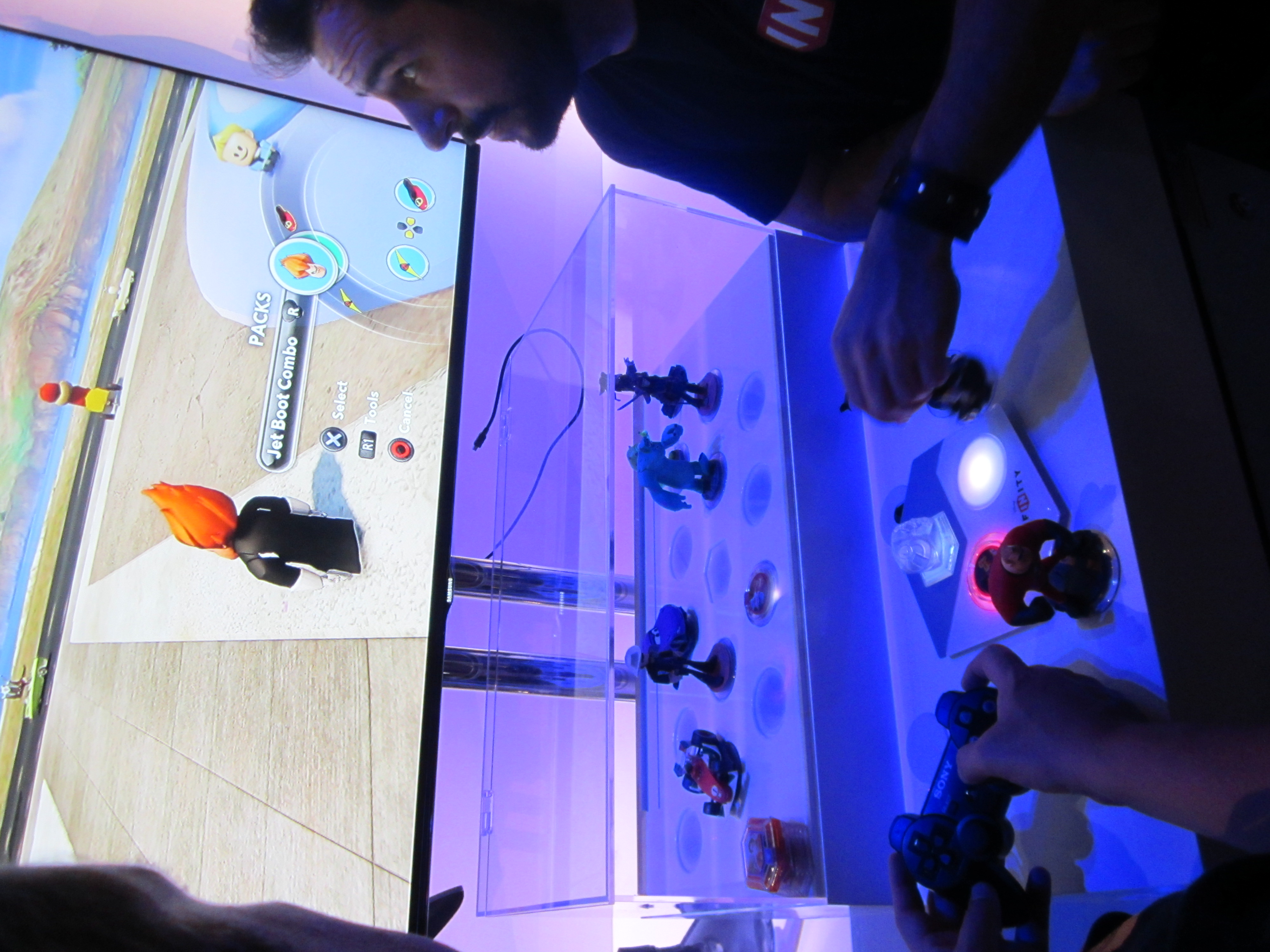
Disney Infinity remains one of the most useful examples of Disney adventure design because it treated characters like toys and worlds like places to experiment. The original idea was simple enough for a child to understand and broad enough for an adult to appreciate: collect figures, enter a world, and build something from there. The image above is from a 2013 E3 display, and it captures that feeling well. This was never just about showing off a license. It was about turning the license into a play space.
Because the game is a legacy title now, the practical advice is a little different. You are usually looking at preserved copies, secondhand figures, and community knowledge rather than a single tidy store page. Even so, I keep it on the list because it shaped the way many players think about Disney sandbox play. It is the sort of game that makes sense the moment you see it.
5. Castle of Illusion Starring Mickey Mouse
Castle of Illusion is a compact example of how Disney can do adventure without drowning the player in complexity. It is bright, direct, and still very readable. The focus is on movement, timing, and a steady sense of progress. Mickey does not need a giant explanation here. The level design does the talking.
I like recommending this one to people who want a Disney game that respects their time. You can get in, understand the shape of the challenge, and enjoy the rhythm without having to memorize a dozen systems. There is a lot to be said for a game that knows exactly how much to ask of you.
6. DuckTales Remastered
DuckTales Remastered is another classic that still works because the core loop is sturdy. You move, jump, search, and chase treasure through levels that always feel like they have a purpose. That treasure-hunting energy is a natural match for adventure play, because every stage feels like a small expedition rather than a random obstacle course.
If you like clean feedback, this is one of the best places to start. The game tells you when you are moving well, when you are missing something, and when a level wants one more pass. It is not trying to be mysterious for mystery’s sake. It wants the player to feel clever, which is usually the right kind of challenge.
7. The Magical Quest Starring Mickey Mouse
The Magical Quest Starring Mickey Mouse is a smaller name in the modern conversation, but it still deserves attention because the design is so honest. It is colorful, approachable, and built around the kind of platform-adventure flow that works well for a younger player or anyone who wants a straightforward Disney experience. No unnecessary drama. No thick setup. Just a good pace and a clear path.
That clarity is part of the charm. Not every adventure game needs to be sprawling. Some of the most satisfying ones are the ones that understand the value of a manageable session. If you want a game that feels like a clean afternoon instead of a week-long project, this is a useful option.
What Makes These Games Fun and Challenging
The best Disney adventure games usually share a few mechanics, and I think it helps to name them. Once you see the pattern, you can choose a game more confidently. You also stop blaming yourself when a title feels slow in the middle. Sometimes the game really is asking you to work through a specific kind of puzzle or movement rhythm. That is not your lack of talent. That is the recipe.
- Exploration. Disney adventure games reward the player who looks around instead of sprinting straight ahead. Hidden items, side quests, and optional conversations often matter as much as the main path.
- Puzzle solving. Doors, switches, item combinations, map shortcuts, and environmental clues are common. These games often want you to notice the world before you master it.
- Character progression. New abilities, stronger tools, and better movement usually arrive in stages. This keeps the game from feeling flat.
- Gentle combat or challenge spikes. Even family-friendly titles often include bosses, timed sections, or enemies that ask you to stay alert.
- Collection loops. Many Disney games make collecting feel meaningful because the items are tied to characters, worlds, or story unlocks.
- Story checkpoints. A good Disney adventure game usually advances through clear milestones, so you always know what you are working toward.
The challenge is not always about raw difficulty. Often it is about attention. A Disney adventure game may ask you to move more slowly than a racing game, or to spend a few minutes finding the right object instead of charging ahead. If you enjoy that pace, the game starts to feel thoughtful rather than sluggish.
There is a design reason for this. Disney games are usually trying to welcome a wide audience, including players who may not be looking for a punishing experience. The challenge still exists, but it is usually wrapped in a gentler shape. That is why these games can work so well for families, casual players, and people who want a relaxing evening with a clear goal.
How I Judge Whether a Disney Adventure Game Is Worth Playing
When I am deciding whether to recommend a Disney adventure game, I use a simple filter. It keeps me honest, and it keeps the advice practical.
| Question | What a strong answer looks like | Why I care |
|---|---|---|
| Does the game teach itself quickly? | You understand the core loop within the first session. | A Disney game should feel inviting, not like a training manual. |
| Does exploration matter? | Optional paths, items, or rooms reward curiosity. | Adventure games should make wandering feel useful. |
| Do the characters matter mechanically? | The characters do more than provide fan service. | If the character changes the play style, the game tends to age better. |
| Is the challenge fair? | Difficulty rises in a way that feels learnable. | Players should feel tested, not tricked. |
| Is there a reason to come back? | Quests, collectibles, upgrades, or story arcs give you a next step. | The best Disney adventure games make a return visit feel natural. |
This is why I keep praising games like Dreamlight Valley and Kingdom Hearts. They give the player a reason to keep moving without making the path feel like a treadmill. That is harder to do than it looks. A game can have beautiful art and still fail if the loop is not satisfying. Disney games that last usually understand that the loop is the whole bargain.
Where to Find and Play Them
If you want the practical answer, start with the official game pages and the storefronts attached to the platform you already use. That is the least messy route, and it is the safest way to avoid outdated listings or unsupported editions. For current Disney titles, the official sites for Disney Dreamlight Valley and Kingdom Hearts are useful starting points because they point you toward the current release information. For older or legacy titles like Disney Infinity, the best path is usually a combination of preserved media, reliable community guides, and the secondhand market.
Here is the cleanest way I would search, in order:
- Official site first. It usually gives the most accurate platform and edition details.
- Console storefront second. Check the PlayStation Store, Nintendo eShop, or Xbox storefront if the title is still sold digitally.
- PC storefront third. Steam, Epic Games Store, or another official PC seller can confirm current availability.
- Mobile app stores when relevant. Some Disney experiences are built for phones or tablets instead of consoles.
- Preservation and community resources for legacy games. If a title is no longer sold widely, fan communities and archival resources are often the practical route to learning what still works.
That last point matters more than it used to. A lot of older Disney adventure games are not difficult to love, but they can be a little difficult to locate in a clean, current format. If that happens, do not treat it as a failure on your part. Treat it like the normal maintenance work of being a retro-game player. That is the price of history, and sometimes it is worth paying.
I also recommend checking a game’s community guides before you start. Disney games often have hidden collectibles, missable quests, or version-specific quirks that are easier to understand with a little outside help. You do not need to spoil the whole thing. You just need enough context to keep the game from getting stuck in an awkward corner.
If you want to keep your search focused, this simple rule helps: choose one modern game, one classic platformer, and one legacy curiosity. That gives you range without turning the whole topic into a backlog project. A lot of people need fewer choices, not more.
Which One Should You Try First?
Here is the short version I would give a friend who asked me for a recommendation without a long lecture attached to it.
- Choose Disney Dreamlight Valley if you want a cozy, modern adventure that lets you relax while still making progress.
- Choose Kingdom Hearts if you want a larger story, more combat, and the feeling that Disney worlds can carry epic stakes.
- Choose Disney Epic Mickey: Rebrushed if you want something artistic, slightly odd, and more focused on shaping the world as you play.
- Choose DuckTales Remastered or Castle of Illusion if you want a classic challenge with a clear beginning and end.
- Choose Disney Infinity if you are drawn to toy-box creativity and do not mind hunting down a legacy setup.
That is the good news about Disney adventure games. They are not one single experience. They are a shelf full of different moods. Some are playful. Some are dramatic. Some are short enough for a weekend. Some can quietly eat a month of your evenings if you let them. The common thread is that they all use familiar characters to make the adventure feel easier to enter and more satisfying to finish.
Final Thoughts
Disney adventure games work because they understand a simple human need: people like to feel welcomed before they feel challenged. The best titles in this space give you a story worth following, a world worth exploring, and a reason to keep going when the next step asks for a little patience. That is not a small thing. It is the entire art of the genre.
If I had to reduce the whole guide to a few practical takeaways, I would say this:
- Adventure games are at their best when story and mechanics support each other.
- Disney characters help lower the entry barrier without lowering the quality bar.
- Modern titles like Kingdom Hearts and Disney Dreamlight Valley are the easiest starting points.
- Older games like Castle of Illusion, DuckTales Remastered, and The Magical Quest are still worth a look if you enjoy clean platforming.
- Where you play matters, so check official sites and storefronts before you buy.
If you want to keep browsing, start with the homepage for the main game hub, move on to the blog for more Disney game articles, or reach out through the contact page if you want help finding the right place to begin. A good adventure usually starts with one clear next step. That is enough for now.